
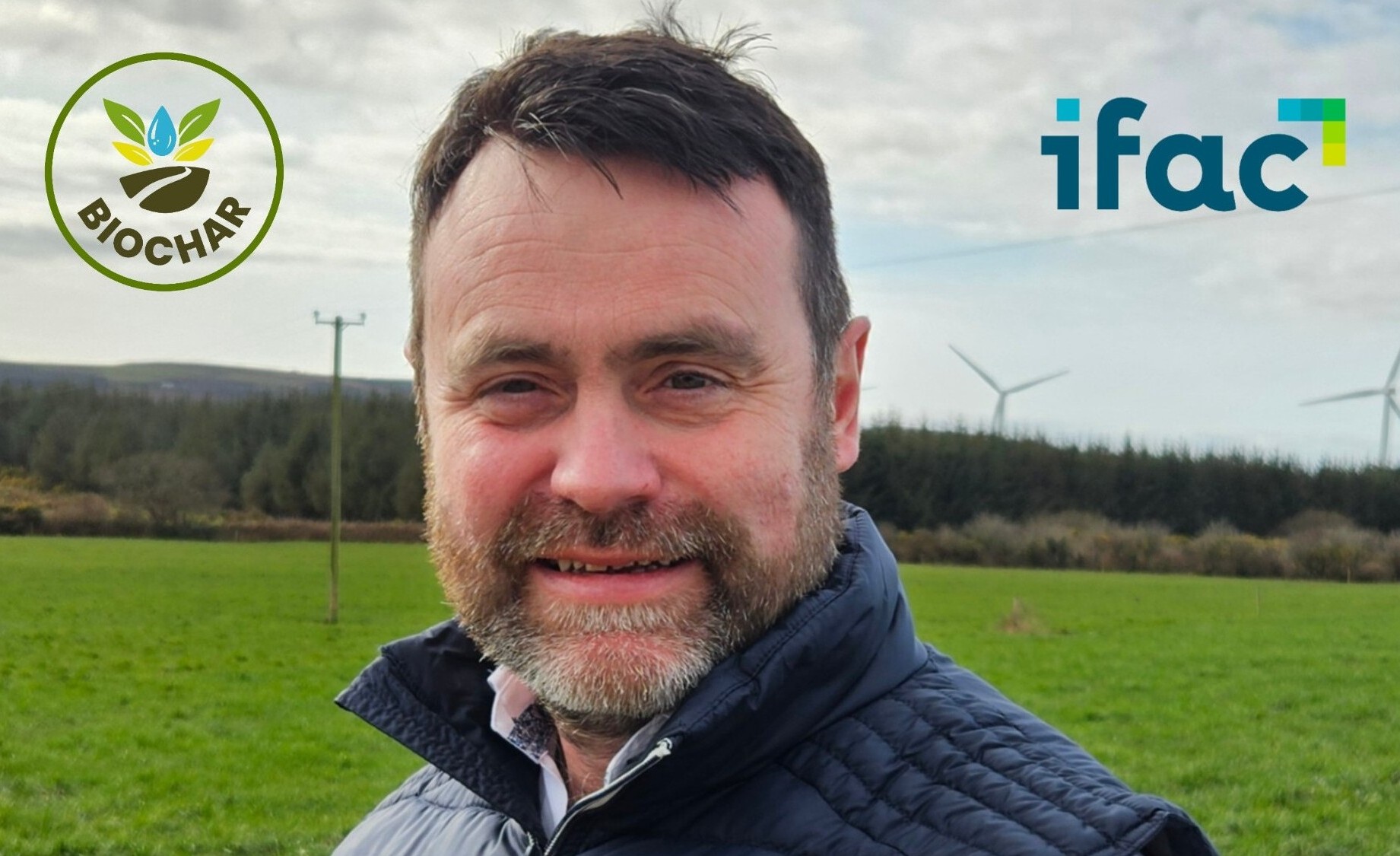
The BIOCHAR Project Consortium has announced the appointment of IFAC, Ireland’s leading farming, food and agribusiness professional services firm, to lead the development of a comprehensive socio-economic impact framework. The framework will assess the economic, social and environmental value that biochar, a carbon-rich material produced from biomass that can improve soil health, store carbon and support a range of sustainable industrial applications and the wider bioeconomy, can bring to communities, businesses and rural economies across Ireland’s Just Transition Region.
Following a competitive tender process, this appointment marks an important milestone for the BIOCHAR Project as it seeks to demonstrate not only the environmental benefits of biochar technologies, but also their capacity to create lasting economic opportunities, support rural livelihoods and strengthen regional resilience. Developed in collaboration with the Western Development Commission and BIOCHAR consortium partners, the framework will provide an evidence-based methodology for measuring the social and economic impacts of biochar deployment and the growth of the emerging circular bioeconomy.
The framework will engage directly with local authorities, farmers, foresters, businesses and community organisations throughout the Just Transition Region to identify and measure the opportunities created through investment in sustainable biochar value chains.
Welcoming the appointment, JJ Leahy, Project Lead of the BIOCHAR Project, said:
“The BIOCHAR Project is about demonstrating that climate innovation can deliver tangible benefits for people, communities and regional economies as well as the environment. IFAC brings significant expertise in agriculture and rural economy and we welcome their contribution to this important element of the project.”
Commenting on the appointment, Karol Kissane, Head of Public Sector Services and Economics for IFAC said:
“IFAC is pleased to have been selected to lead the development of a robust, evidence-based framework to measure the socio-economic impact of biochar and the wider bioeconomy in Ireland. We look forward to working closely with the Western Development Commission and consortium members, engaging directly with local authorities, farmers, foresters and communities across the Just Transition Region to ensure the framework captures the real opportunities biochar and the bioeconomy present for people living and working in the region.”
The socio-economic impact framework, which is expected to be completed by Q2 2027, will examine how biochar can contribute to employment, enterprise development, farm resilience, skills development, regional supply chains and community wellbeing. The findings will provide policymakers, investors and industry with practical evidence to support the continued growth of Ireland’s bioeconomy and maximise the long-term legacy of the Just Transition Fund investment.
Led by the University of Limerick, the BIOCHAR Project is funded through the European Union’s Just Transition Fund and the Government of Ireland. The project is demonstrating innovative applications for biochar across agriculture, water treatment, construction and environmental remediation, while supporting the transition to a more circular, low-carbon economy in the Midlands and wider Just Transition Region.
The appointment of IFAC reinforces the BIOCHAR Project’s commitment to ensuring that the environmental benefits of biochar are matched by measurable economic and social outcomes for the communities at the heart of Ireland’s transition to a sustainable bioeconomy.